Last Updated on June 4, 2026 by David
How to Recognise the Signs of a Neglected Slate Floor: Uncovering Dullness and Lifelessness
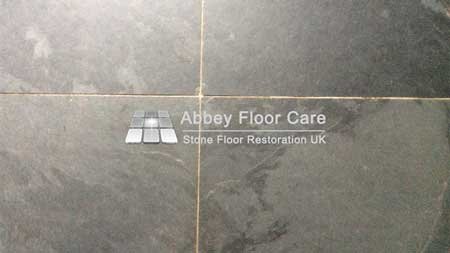
If your slate floor appears lacklustre, dark, and lifeless despite your consistent cleaning efforts, it indicates a deeper issue than just surface dirt. In the kitchen and dining spaces of Matlock, the slate floor had reached a particularly concerning state. Once vibrant, the surface had lost its allure, with natural colour variations dulled and visible grout lines contributing to an overall sense of neglect and age.
The homeowner attempted to revive the floor’s appearance using a steam cleaner. While this method produced a temporary improvement, persistent dark patches returned, highlighting ongoing surface contamination and the inherent challenges presented by the textured finish of the slate.

The unique riven surface of the slate posed considerable cleaning challenges, as the natural ridges and troughs tended to hold dirty water. Although aesthetically pleasing, this characteristic can lead to a floor that appears permanently stained when the protective finish wears away.
The absence of grout in the kitchen area worsened the situation, creating small gaps where dirty wash water could gather. The combination of dark grout lines, localized grout loss, and heavy soiling diminished the floor’s overall appeal, obscuring any clear, identifiable issues.
Located in the DE4 postcode district, Matlock is a town steeped in history, originally developed as a Victorian spa and hydropathy centre following the arrival of the railway in 1849. This expansion resulted in a rise in stone-built homes, guest houses, and villas featuring slate floors, prized for their durability and low maintenance in bustling domestic environments. The conservation areas surrounding Old Matlock, Matlock Bank, and the former spa quarter further enhance the appeal of these properties, underscoring the necessity of careful restoration rather than simple replacement.
The evaluation of the floor’s visible condition drew upon extensive hands-on experience with domestic slate. David Allen’s expertise in stone restoration, through Abbey Floor Care, spans over three decades, equipping him with essential knowledge to navigate the intricate relationships between soil, worn protection, grout condition, and surface texture.
The slate floor in Matlock required a restoration strategy focused on enhancing its aesthetic appeal without compromising its natural character. The objectives included restoring clarity, improving grout visibility, and re-establishing a surface that would respond effectively to cleaning, all while maintaining the unique riven texture of the slate.
Why Did Regular Mopping Fail to Keep the Slate and Grout Clean?
The primary reason the slate in Matlock appeared dirty soon after mopping was the deterioration of its old protective layer. This compromised surface allowed contaminants to settle within the recessed areas and grout joints, causing clean water to merely circulate soil rather than effectively removing it.
As the sealer breaks down, its ability to manage moisture and soil at the surface diminishes. Homeowners often notice rapid re-soiling, dull patches, and discoloured grout after washing. The solution lies in a controlled restoration process followed by suitable sealing, rather than resorting to more aggressive household cleaning methods.
Mopping cannot effectively remove grime once the surface is compromised.
The riven slate features a mechanically split surface formed along natural cleavage lines, presenting significant cleaning challenges. As a fine-grained metamorphic rock, slate cleaves along its natural planes, which prevents mechanical polishing and limits restoration processes to cleaning and sealing. This structure also makes it vulnerable to harsh cleaning chemicals.
Potential issues such as flaking or loose edges were approached with realistic expectations rather than promises of perfection. Layer separation occurs when weak mineral planes start to lift or break away, resulting in visible flaking or small loose fragments. The appropriate correction involves careful stabilisation or localized repair wherever possible.
Executing a Comprehensive Restoration: Combining Deep Cleaning, Pressure Rinsing, Grout Repair, and Sealing
Cleaning a riven slate floor without properly addressing rinsing, grout gaps, and protective sealing can lead to rapid re-soiling. In Matlock, the workflow consisted of a coordinated approach that integrated cleaning, pressure rinsing, grout repair, and sealing, viewed as a unified process.
Deep cleaning involved releasing embedded organic soils using a specialised slate cleaner, allowing sufficient dwell time and machine agitation across the textured surface. The machine’s capabilities enabled it to reach deep grooves and recessed areas that a mop could not effectively clean, preparing the floor for thorough residue removal rather than merely redistributing dirty solutions.
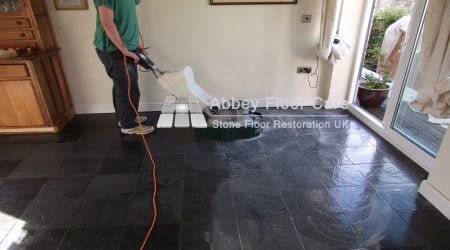
Controlled pressure rinsing ensured that slurry was eliminated before it could dry back into the riven surface, which was vital. Slurry extraction and wet vacuum recovery effectively managed contamination, preventing dissolved residue from resettling into the textured areas that complicate maintenance. More information on the complete restoration sequence can be found in professional slate floor restoration techniques, where cleaning, repair, and protection are considered interconnected decisions.
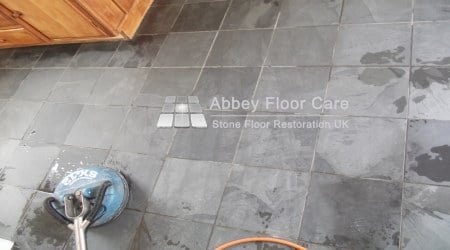
Local grout repair addressed the missing joint areas prior to sealing, which secured the enhanced condition. The application of an impregnating sealer reduced absorption within the slate, while a surface sealer provided a low sheen that made the riven floor easier to maintain than cleaning alone could achieve.
Evaluating Post-Restoration Outcomes: Enhancing the Slate Floor’s Response to Regular Cleaning
The true measure of success was not only the rejuvenated appearance of the slate but also its improved responsiveness to routine cleaning. Before restoration, the floor remained flat, dark, and unwelcoming due to contamination and diminished surface protection after each wash.
The newly restored finish significantly enhanced the slate’s appearance and, in many instances, surpassed the original installation quality. The correct sealer revitalised the slate’s natural hues and provided essential surface protection. Before restoration, the grout detracted from the overall appearance; after restoration, the enhanced tile definition and low-sheen finish resulted in a cleaner, more polished look.
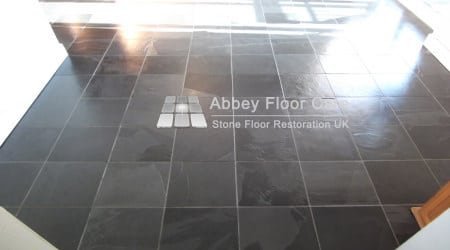
The maintenance handover emphasised the importance of removing grit from the floor prior to wet mopping and using a pH-neutral stone cleaner instead of steam cleaning, which can damage coatings and drive moisture into textured areas. A professionally restored and properly sealed floor is significantly easier to clean and maintain compared to one that is worn or improperly treated.
Understanding the Importance of Slate Restoration for Sustainable Floor Care and Maintenance
A heavily soiled slate floor should be regarded as a long-term care challenge rather than merely a one-time cleaning issue. The Matlock project highlighted the necessity to plan cleaning, grout repair, and protection as interconnected tasks since the old surface no longer supported straightforward maintenance.
Proper ongoing maintenance, including pH-neutral cleaning, grit removal before wet mopping, and timely resealing, is essential for extending the floor’s lifespan. Homeowners should avoid steam cleaners, as the heat and moisture can compromise the protective layer and reignite cleaning difficulties. More comprehensive guidance on slate behaviour, sealing options, and long-term care is available in slate floors in UK homes, which situates this case study within a broader restoration and maintenance framework.
Experienced assessment also ensures realistic outcomes where structural conditions may limit restoration possibilities. The ideal result is a floor that appears significantly improved, retains its natural texture, and remains easier to maintain after professional restoration.

David Allen — Abbey Floor Care
With over 30 years of experience, David Allen has been restoring slate and stone floors across the UK with Abbey Floor Care. This case study from Matlock, Derbyshire demonstrates how challenges of heavy soiling, lost grout, and compromised surface protection were effectively resolved through deep cleaning, pressure rinse recovery, local grout repair, and sealing.
The Article Slate Floor Cleaning Service Restored This Matlock Floor first appeared on https://www.abbeyfloorcare.co.uk
The Article Slate Floor Cleaning Service Revitalised a Matlock Floor appeared first on https://fabritec.org
The Article Slate Floor Cleaning Service Transforms Matlock Floors Was Found On https://limitsofstrategy.com
The Article Slate Floor Cleaning Service Revitalises Floors in Matlock found first on https://electroquench.com