Last Updated on May 20, 2026 by David
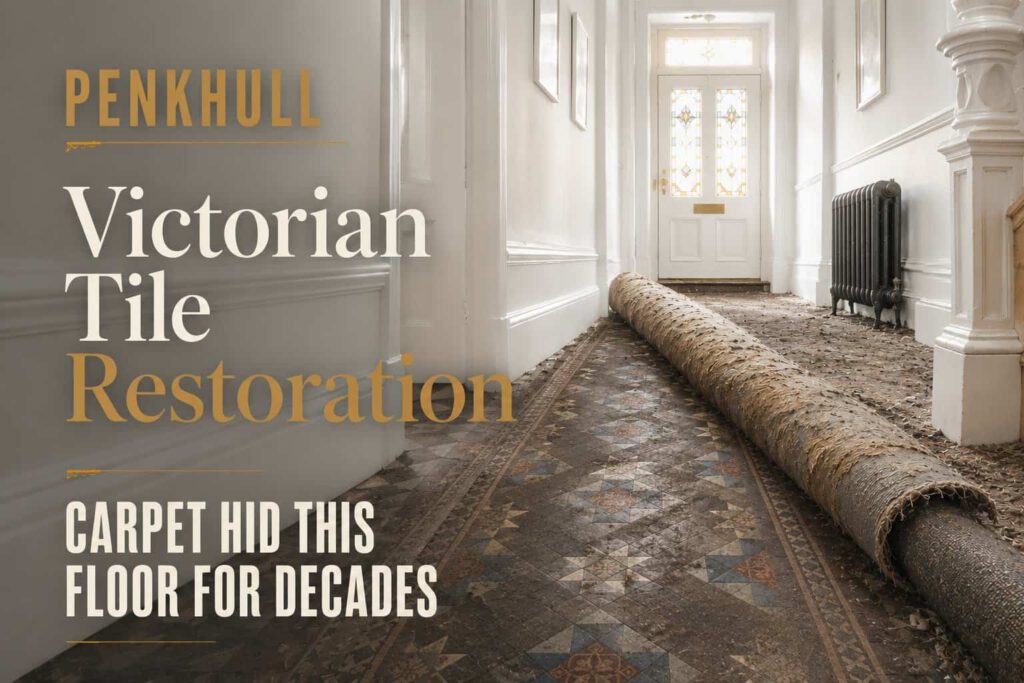
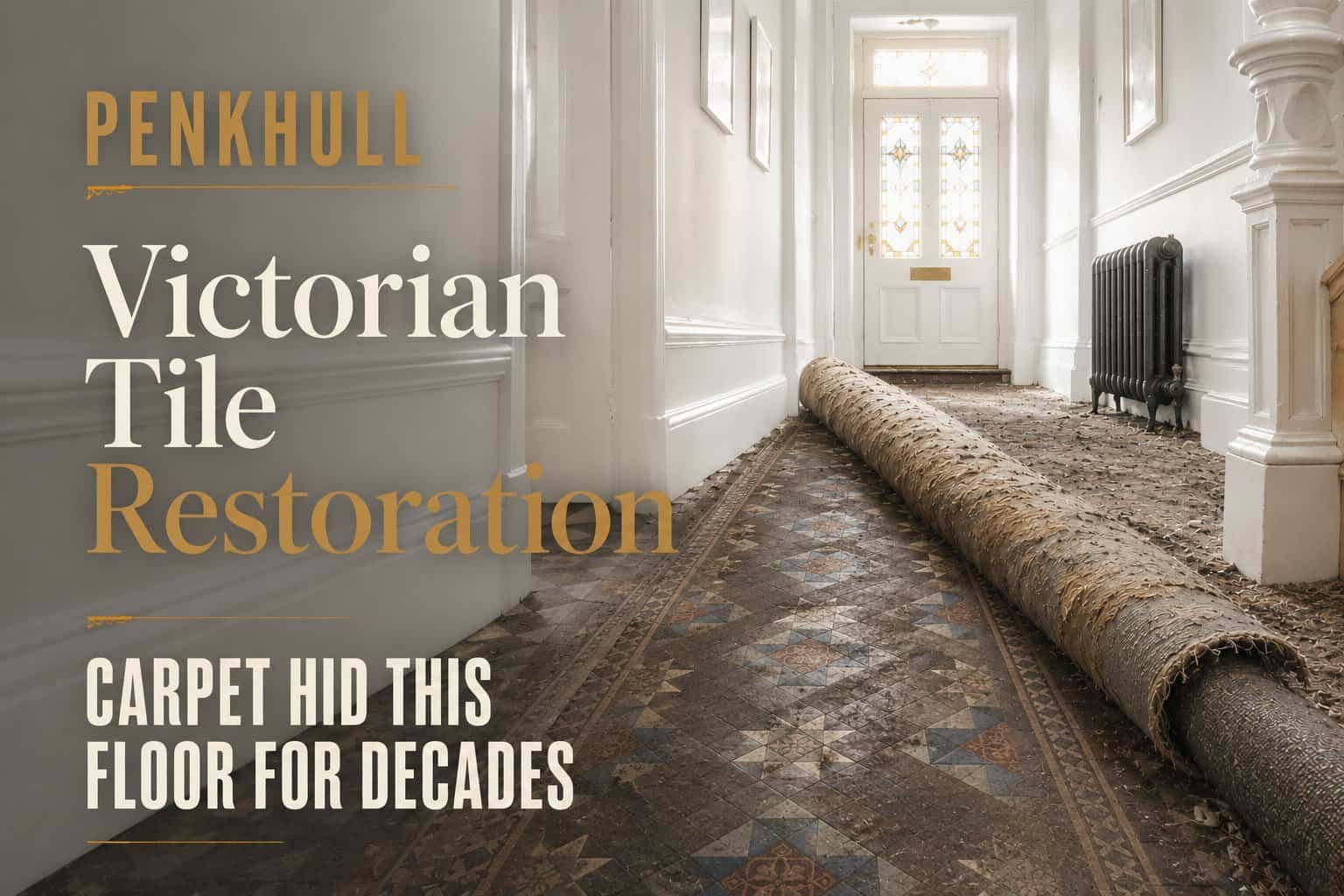
The meticulous restoration of Victorian tiles in the Penkhull hallway began after years of carpet obscured the original floor’s condition. Once the carpeting was lifted, the distinctive Minton and Victorian tiles came to light, revealing various challenges such as hidden movement, trapped residues, darkened joints, and faded colours that had suffered from prolonged exposure to darkness and lack of ventilation.
This brief video illustrates the condition of the Penkhull hallway before and during the restoration process, with detailed project information provided below.
Discover the Hidden Challenges Beneath Your Carpet: Elevate Your Victorian Tile Restoration in Penkhull
Comprehensive Evaluation of Initial Floor Conditions
If your Victorian tile floor has long been concealed beneath carpet, the main concern often lies beyond visible dirt. What lurks beneath can disclose a floor marked by everything that has transpired under the covering. In Penkhull, the homeowner uncovered a dark and uneven hallway floor that starkly contrasted with the decorative entrance feature designed to welcome visitors.
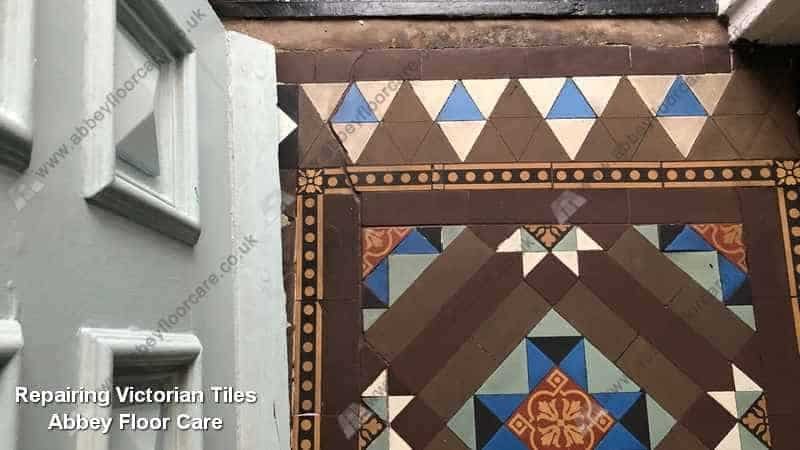
Upon removing the carpet, the original geometric and encaustic tiled hallway revealed flat colours, dull patches, and areas where the surface appeared weary rather than merely dusty. Although the intricate patterns remained intact, the floor had absorbed residues from old coverings, household cleaning products, and years of moisture trapped beneath an impermeable layer.
Penkhull, located in the City of Stoke-on-Trent within the ST4 postcode area, is renowned for its high concentration of late Victorian and Edwardian terraced houses, as well as larger villas and inter-war suburban developments around Trent Valley Road and Prince’s Road. Original <a href="https://fabritec.org/victorian-tiles-restoration-for-worn-minton-floors/">Victorian tile floors</a> are primarily found in entrance hallways, vestibules, porches, and main reception areas, where geometric and encaustic designs were employed to create a robust decorative first impression. Much of the housing stock dates back to the rapid expansion of the Potteries during the mid to late 19th century, with solid-wall terraces and period properties still contributing significantly to the area's character today. Penkhull retains a rich heritage identity, evident in its older street layouts, historical workers’ housing, and surviving architectural features linked to Stoke-on-Trent’s industrial growth.
During the 19th century, Penkhull experienced rapid development as the pottery industry, railway connections, and associated engineering trades drove significant population increases across Stoke-on-Trent. Families connected with manufacturers such as Spode and Minton played a crucial role in shaping the area’s housing stock, explaining why so many local hallways and entrance passages continue to feature original Victorian geometric and encaustic tiled floors today.
Recognising the Visible Issues Impacting Your Floor
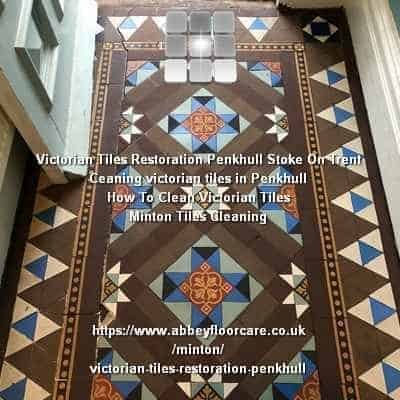
The darkened joints throughout the Penkhull hallway indicated where old coatings, trapped dirt, and cleaning residues had settled into the gaps between tiles over the years. The floor exhibited multiple simultaneous problems, including muted colours, dull patches, edge staining, and isolated areas where tiles had begun to shift slightly underfoot.
The clay tile surface reacted inconsistently, with certain areas retaining more contaminants than others while hidden beneath the carpet. This discrepancy is crucial when assessing a period floor; it was never intended to be viewed as a perfectly flat modern surface but as an original hallway burdened by old coverings, potential adhesive residues, historic moisture exposure, and natural colour variations across the installation.
The Penkhull project mirrored the Minton tile floor restoration in Ovington, where challenges associated with old coatings, carpet-related contamination, loose tiles, and colour recovery defined the scope of work. Both projects featured original patterned floors that required meticulous restoration rather than a generic cleaning approach. The Penkhull hallway presented its unique pattern layout, movement history, residue accumulation, and moisture behaviour.
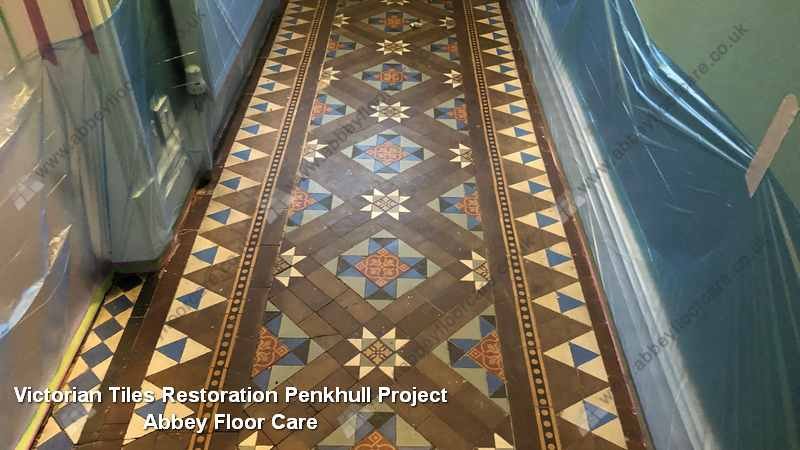
Once the main covering was removed, the original patterns became distinctly visible. The vibrant colours had only been concealed beneath years of contamination that dulled the surface and muted the contrast between the geometric sections. There was no need for artificial enhancement; the character of the floor was already embedded within the original layout, borders, and surviving Minton-style detailing.
Understanding Homeowner Concerns and Documenting Project Evidence
The homeowner expressed a desire for the entrance hall to regain a clean and inviting atmosphere while preserving the historical significance that warranted the floor’s restoration. Despite years of neglect, the surviving pattern lines, original surface, and remaining colours indicated that the floor merited careful restoration from the first inspection to the final results.
Movement within the hallway was noticeable long before it became visually apparent. This aspect is often significant with old tiled floors, as loose sections, lifting edges, and unstable bedding can lead to a surface that appears worse after repeated mopping, especially where moisture travels through permeable sub-floors and no effective damp-proof barrier exists beneath the installation.
Carpets and other floor coverings frequently leave behind adhesive residues, gripper damage, staining, and dark shadow marks on older tiled surfaces. The Penkhull hallway exhibited the same type of concealed-floor evidence discussed in the Trinity Edinburgh Victorian tile restoration case study, where impervious coverings and traditional hallway construction influenced what could be safely achieved. Importantly, the visible surface rarely tells the complete story until the floor is uncovered and thoroughly assessed.
Victorian encaustic and geometric tiles are clay-fired at high temperatures, making the fired surface chemically stable yet physically vulnerable to abrasion and unsuitable for acidic cleaning methods. This consideration was crucial here, as worn fire skin, vulnerable edges, trapped residues, and historic colour variations had to be acknowledged as existing floor conditions rather than merely treated as superficial dirt.
The original tile face maintained a fired matte surface, which did not require polishing away. A properly restored Victorian tile floor should still retain that matte character, while any suitable topical protection adds only a restrained protective sheen without altering the period appearance of the floor itself.
Uncovering the Causes of Loose Victorian Hallway Tiles and Dark Grout Lines
Dark grout lines and slight movement often indicate underlying issues lurking beneath the visible surface. In the Penkhull hallway, dirty liquids infiltrated grout joints, weakened bedding areas, gaps, and deteriorated sections, resulting in repeated mopping that only provided a temporary appearance of cleanliness before the same dark lines resurfaced.
Loose tiles further confirmed that sections of the old floor system had become unstable, rather than merely dirty on the surface. Water could seep through vulnerable joints, increasing dampness within the permeable sub-floor below, leading to isolated tiles becoming loose, lifting, or sounding hollow where the structure was no longer sufficiently dry or secure for sealing.
Dark joints and loose tiles typically stem from the floor system rather than dirt alone.
The same relationship between movement, trapped residues, and traditional floor behaviour is evident in the Walsall Minton floor restoration. This comparison elucidates why the Penkhull hallway required treatment as a comprehensive restoration project rather than a quick surface clean. The visible symptom was dark grout lines, while the underlying issue lay in contamination trapped within a moving floor structure.
Employing Gentle Victorian Tile Restoration Techniques with Controlled Cleaning Approaches
Aggressive stripping techniques can leave an old Victorian tile floor excessively wet for prolonged periods, making it slower to stabilise and much harder to dry safely before sealing. In Penkhull, therefore, the hallway underwent cleaning through a series of controlled passes, rather than a single heavy application of water and potent chemicals.
Gentle repeated cleaning allowed softened residues, waxes, old coatings, and contaminated solutions to gradually release from the tile pores. Wet vacuum extraction subsequently removed slurry, rinse water, loosened soiling, and dirty fluids after each pass, helping to mitigate the risk of over-wetting, salt mobilisation, or further disturbance within weakened bedding areas.
Heavy wet stripping would have heightened the likelihood of excess moisture penetrating the floor, thereby delaying the drying process before sealing. Similar principles of colour recovery are explored in restoring colour and pigment to faded Victorian mosaic tiles. In this Penkhull project, the improvements stemmed from controlled extraction, gradual residue removal, and patience, rather than force.
Transforming Restored Victorian Hallway Tiles in Penkhull into a Striking Feature While Preserving Their Original Character
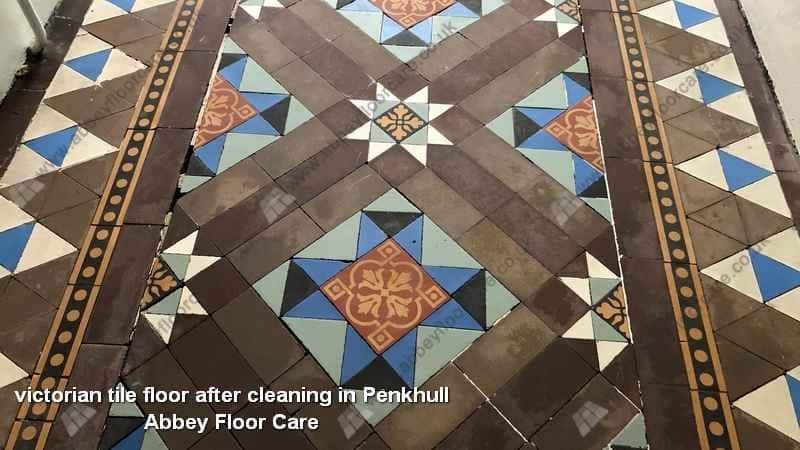
If your restored Victorian hallway appears cleaner yet still exhibits signs of age, that is often the desired result for an original period floor. The Penkhull hallway looked substantially improved after restoration, showcasing stronger colours, clearer pattern definitions, and a more even matte appearance that respected the natural signs of age and use.
The enhancement of colour was achieved through the application of a breathable impregnating sealer that penetrated the tile pores, enhancing protection, and was subsequently buffed away from the surface without leaving behind a heavy topical coating. The hallway also became easier to maintain, as dirt and residues were no longer binding so aggressively to the open contaminants resting on the surface.
Proper maintenance is crucial for extending the life of Victorian tiles, which involves removing grit before wet mopping, using pH-neutral cleaning products, and resealing at appropriate intervals. It is advisable to avoid steam cleaners, as heat and moisture can force water into grout lines, cracks, staining, and areas susceptible to efflorescence. Broader maintenance guidance is available in the Victorian and Minton tile cleaning hub, which offers extensive care advice beyond this particular Penkhull case study.
Explore Additional Victorian Tile Restoration Projects Showcasing Careful Restoration of Period Hallway Floors
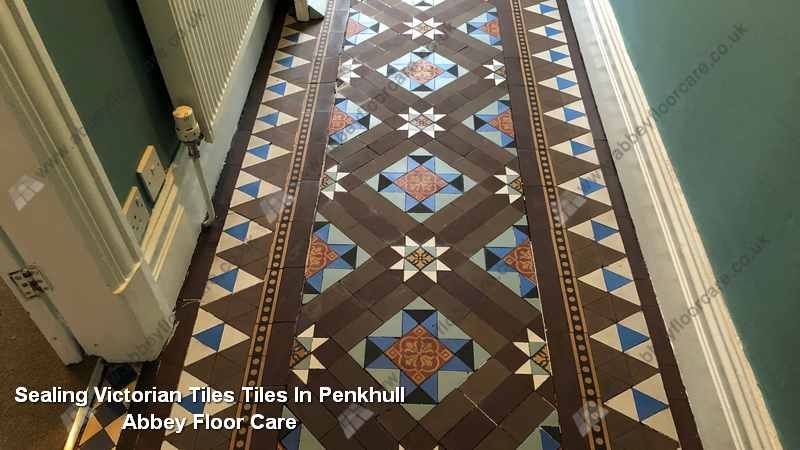
Related projects in Victorian tile restoration assist homeowners in comparing similar floors without turning this case study into broad, generic advice. The Penkhull hallway details one complete sequence of work: carpet removal, residue discovery, correction of loose tiles, repeated cleaning, drying, sealing, and final inspection.
Other completed projects also illustrate how original Minton and Victorian floors can regain clarity while still preserving their period character. The Burton on Trent Victorian clay tile restoration showcases another period floor where residue removal, moisture management, and colour recovery defined the final outcomes. Collectively, these projects uphold the same evidence-based principle: restoration should dramatically enhance the floor without erasing the history visible within the original surface.
The Penkhull project further underscores why detailed maintenance guidance should be included within the material hub rather than becoming a separate sales pitch within the case study itself. The Victorian and Minton tile cleaning hub encompasses broader topics including residue build-up, moisture behaviour, grout lines, and safe routine care. This Penkhull hallway serves as a prime example: a hidden Staffordshire entrance floor was meticulously restored and made significantly easier to maintain.

David Allen — Abbey Floor Care
David Allen of Abbey Floor Care has dedicated over 30 years to restoring Victorian and encaustic tile floors. In this Penkhull case study, he documented the transformation of a carpet-covered hallway with loose sections, dark joints, and trapped residues, all while preserving the original period character.
The Article Carpet Hid This Victorian Tile Restoration first found on https://www.abbeyfloorcare.co.uk
The Article Victorian Tile Restoration Hidden Under Carpet appeared first on https://fabritec.org
The Article Victorian Tile Restoration Unearthed Beneath Carpet Was Found On https://limitsofstrategy.com
The Article Victorian Tile Restoration Discovered Underneath Carpet found first on https://electroquench.com